Lithium Battery Shipping: Big Changes on the Horizon
Dangerous goods regulations are often viewed as slow-moving, but lithium batteries are proving to be the exception. Around the world, regulators are working to address new battery technologies, emerging transportation applications, and evolving safety concerns. While many of these discussions remain works in progress, they offer valuable insight into where dangerous goods regulations may be heading in the years ahead.
For Canadian dangerous goods professionals, one of the biggest challenges is not simply understanding today’s rules. It is understanding how international developments may eventually influence the Transportation of Dangerous Goods (TDG) Regulations.
UN3536: A Practical Example of Regulatory Evolution
UN3536, “Lithium batteries installed in cargo transport unit,” was introduced to address large lithium battery systems that are installed within a cargo transport unit rather than being shipped as individual battery packages. A common example is a containerized battery energy storage system that is transported as a complete unit and provides power for an external application.
This type of technology is becoming increasingly common as lithium batteries are incorporated into energy storage and transportation equipment. Traditional lithium battery classifications were not necessarily designed with these larger, permanently installed systems in mind, which created the need for a specific UN entry and corresponding transport requirements.
The United States has incorporated UN3536 into 49 CFR, along with Special Provision 389, which establishes specific conditions for transporting these systems.
Canada has approached some emerging battery applications differently. Where the current TDG Regulations do not provide an appropriate pathway for a particular activity, organizations may need to obtain a Transport Canada Equivalency Certificate, allowing the activity to take place under specified conditions that provide an equivalent level of safety.
For Canadian dangerous goods professionals, UN3536 provides a useful example of a broader issue: international recommendations and national regulations do not always evolve at the same pace. As battery technology continues to develop, understanding both the regulations in force today and the changes taking place internationally is becoming increasingly important.
Lithium Batteries Are Becoming More Complex
The introduction of UN3536 was only the beginning.
Lithium batteries are now used in consumer electronics, energy storage systems, electric vehicles, cargo transport units, industrial equipment, and transportation infrastructure. As battery technologies become more diverse, regulators are increasingly questioning whether the current classification system adequately reflects the risks presented by different battery designs.
Today, most lithium batteries are assigned to a small number of entries such as UN3480, UN3481, UN3090, UN3091, and UN3536. While these classifications have served the industry well, they were developed during a period when battery technologies were significantly less varied than they are today.
Could Lithium Battery Classification Change?
One of the developments being discussed at the United Nations is a hazard-based classification system for lithium-ion, lithium-metal and sodium-ion batteries.
The discussions reflect a growing recognition that battery technologies continue to evolve and that batteries with different designs and characteristics may present different hazards during transportation. International working groups are therefore examining whether the way batteries are currently classified could be improved to better reflect their actual hazard characteristics.
This could eventually result in changes to how batteries are classified and how those hazards are communicated throughout the transportation chain.
However, it is important to emphasize that this work remains under development. No final classification system has been adopted, and any eventual changes would still need to move through the international regulatory process before being incorporated into national and modal regulations.
For Canadian dangerous goods professionals, the important point today is not to prepare for a specific new UN number or classification. It is to be aware that the international framework for classifying lithium and sodium batteries is being actively reviewed.
If a new hazard-based system is eventually adopted, it could have significant implications for classification, documentation, packaging, hazard communication and training.
For now, organizations should continue to follow the current dangerous goods regulations, while keeping an eye on these international discussions as they develop.
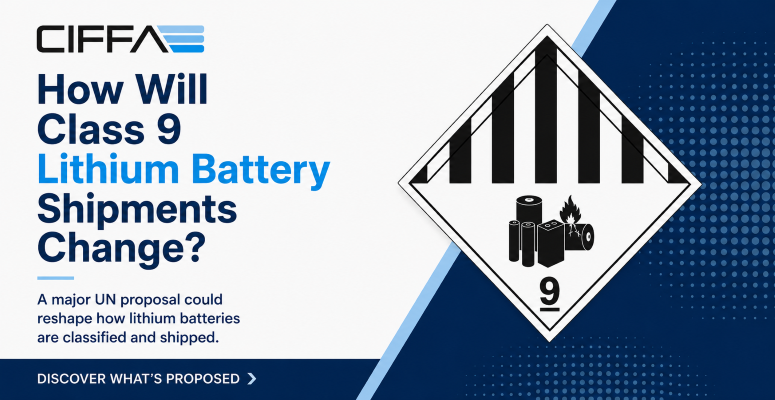
What About New Class 9 Labels?
The discussion is not limited to new UN numbers. And not just to Lithium Batteries under Class 9.
Today, lithium batteries generally fall under Class 9 and utilize the familiar lithium battery Class 9 hazard communication system.
Based on feedback received to date, this proposal includes draft amendments to subdivide Class 9 into four divisions:
- Division 9.1: Environmentally hazardous substances;
- Division 9.2: Energy storage devices;
- Division 9.3: Low hazard energetics; and
- Division 9.4: Miscellaneous.
Why These Discussions Matter Today
It would be easy to dismiss these proposals because they are still being debated. However, dangerous goods professionals should pay attention precisely because these conversations often shape the regulations of tomorrow.
The introduction of UN3536 began as a response to emerging technologies. Today it is an established part of international dangerous goods transportation. Similarly, today’s discussions regarding hazard-based battery classification may eventually become tomorrow’s regulatory requirements.
Organizations involved in dangerous goods transportation rarely have the luxury of adapting overnight. New classifications, labels, packaging requirements, documentation procedures, and training obligations can require years of preparation and implementation.
The Importance of Ongoing Dangerous Goods Training
For dangerous goods professionals, the lesson is clear: compliance is no longer simply about understanding current regulations. It is also about understanding the direction regulations are moving.
Lithium batteries continue to drive regulatory innovation. The growing use of batteries in cargo transport units, Canada’s continued reliance on Equivalency Certificates for certain emerging technologies, and ongoing international discussions surrounding new UN numbers and Class 9 subdivisions all point to a future where dangerous goods classification becomes increasingly sophisticated.
While none of these proposed changes are finalized, they demonstrate how quickly the dangerous goods landscape can evolve. For freight forwarders, shippers, carriers, compliance specialists, and logistics professionals, ongoing dangerous goods training remains one of the most effective ways to stay prepared for whatever comes next.
CIFFA offers a variety of Dangerous Goods training options in transport by road, air and sea, all online, started anytime and completely compliant with Transport Canada, and our certificates are accepted by IATA for the Air Cargo Agent program.
Sources and references:
Transport Canada – Equivalency and Temporary Certificates
UNECE – Hazard-Based Classification of Lithium-Ion, Sodium-Ion and Lithium-Metal Batteries (2026/34)
UNECE – Proposed Model Regulations Amendments (INF.14)
UNECE – 68th Session of the UN Sub-Committee of Experts on the Transport of Dangerous Goods
This is the session page containing the working and informal documents, including the Class 9 subdivision work.